



Description
BAMACTYX™ & BAMLIQUA™ — Two Bamboo Products. A World of Possibilities.
Activated bamboo carbon and bamboo wood vinegar for agricultural applications, product development and a more resourceful farming future.
Bamboo Spirit transforms locally sourced bamboo into two distinctive materials: BAMACTYX™ Activated Bamboo Carbon, steam-activated between 750°C and 900°C, and BAMLIQUA™ Bamboo Wood Vinegar, recovered during controlled bamboo pyrolysis.
Their potential extends across soil and compost management, specialised animal-feed research, filtration and emerging environmental technologies. Each has a different role—and research is exploring how carefully selected preparations can work within the same system.
Understanding the difference
| Product | What it offers | Applications and research directions |
|---|---|---|
| BAMACTYX™ Activated Bamboo Carbon | Porous solid carbon with internal surfaces that can adsorb certain substances. Supplied as uncrushed, ungraded chunks; it can be processed into smaller particle sizes. | Adsorption and filtration, compost blends, microbial-carrier development and specialised feed-ingredient research. |
| BAMLIQUA™ Bamboo Wood Vinegar | A water-based liquid containing organic acids, including acetic acid, alongside phenolic and other organic compounds. Composition depends on production and refining. | Diluted agricultural applications, compost management, specialised feed formulations and development of functional coatings and environmental-treatment ingredients. |
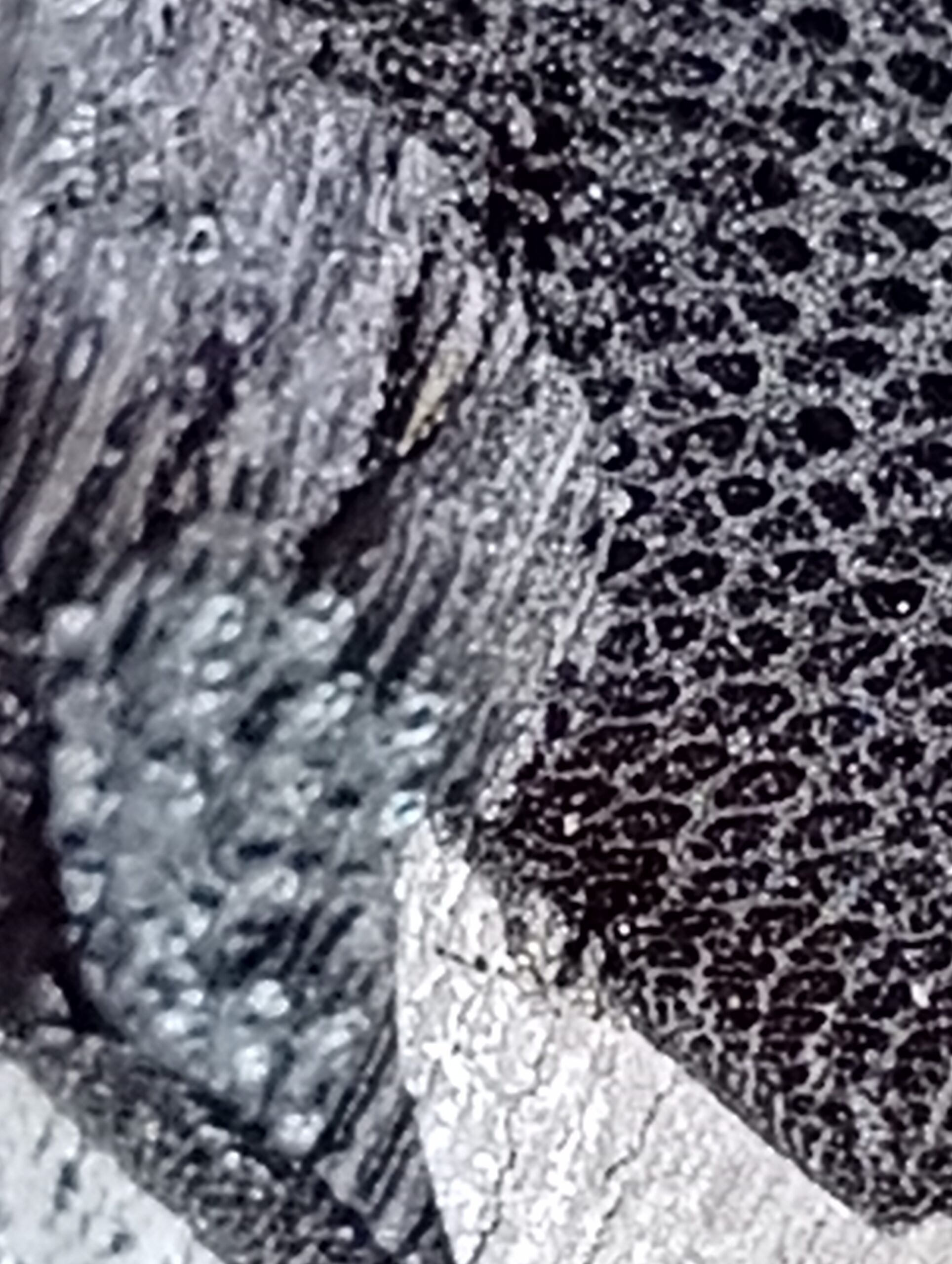
Bamboo’s natural channels provide a useful starting structure for carbon production. Steam activation develops additional pores, creating opportunities for adsorption—the attachment of certain molecules to carbon surfaces. Bamboo wood vinegar contributes a different set of properties through its acidity and organic compounds. The performance of both depends on their composition and the intended application.
Agriculture: opportunities from the root zone to the compost heap
Research into bamboo wood vinegar includes seedling development, crop growth and soil applications. A bamboo-derived wood vinegar study in maize reported improvements in selected growth characteristics under particular treatments. Responses depend on the crop, concentration and application method; stronger solutions are not necessarily more beneficial.
For growers, this creates opportunities to explore appropriately diluted bamboo wood vinegar within crop-management programmes. Follow directions for the specific product and application, and assess crop response on a small area before wider use.
Carbon materials offer another route: incorporating suitable carbon into compost or organic blends can influence nutrient retention and microbial activity. Studies using biochar in cattle-manure compost have reported benefits in these areas, although those results cannot automatically be transferred to every activated carbon.
Compost and manure: a particularly promising connection
Composting is one of the clearest research areas linking bamboo charcoal and bamboo wood vinegar.
Research has investigated bamboo wood vinegar for reducing nitrogen losses during vegetable-waste and manure composting. Another study examined bamboo charcoal and bamboo vinegar together and reported improved nitrogen conservation under its experimental conditions. This supports the development of carefully formulated composting systems that make better use of organic resources.
Potential benefits being explored include:
- Retaining more nitrogen within compost.
- Reducing some gaseous losses during decomposition.
- Influencing microbial activity and compost maturation.
- Producing carbon-containing organic amendments for subsequent soil use.
These are formulation-dependent opportunities. The supporting studies did not test the current BAMACTYX™ and BAMLIQUA™ combination.
Animal nutrition: researched possibilities for both materials
Selected bamboo charcoal and bamboo vinegar preparations have been investigated as feed ingredients, particularly in pigs and poultry.
A study in fattening pigs reported improvements in growth performance, feed efficiency and selected microbial measures with the bamboo charcoal or bamboo vinegar treatments tested. Other experiments have found little or no performance improvement, highlighting the importance of preparation, species, diet and inclusion rate.
For activated carbon, researchers are interested in its ability to bind certain unwanted substances and interact with the digestive environment. For bamboo wood vinegar, research explores how its organic acids and other compounds may influence intestinal conditions and microbial populations. Trials have used different materials, including powders and fermented formulations; these are not interchangeable with an agricultural liquid or ungraded carbon chunks.
The opportunity is to develop suitable, measured feed ingredients—not to add an unspecified amount of either agricultural product to feed or drinking water. Feed use requires an appropriate product specification and a species-specific formulation assessed by an animal nutritionist or veterinarian. Activated carbon may also bind some oral medicines.
For ostriches, an appropriate particle size and feeding programme still need specialist assessment; evidence from pigs or chickens does not establish that ungraded chunks are suitable.
Cattle, digestive processes and the return to soil
Carbon-based feed research also includes the rumen and methane production. A 2024 study found reduced methane emissions under controlled feeding conditions but no significant reduction in its grazing trial. This is an interesting development area, rather than a demonstrated methane-removal claim for BAMACTYX™.
Where suitable carbon is used in an assessed feeding programme, the carbon that passes into manure comes into contact with nutrients, organic matter and microorganisms. This creates the possibility of biologically conditioned, nutrient-associated carbon entering subsequent manure-management and composting systems.
That does not mean every particle becomes a beneficial microbial inoculant. The practical opportunity is in managed manure–carbon systems, where composting and conditioning can influence the final material’s properties. Research on carbon-enriched cattle manure supports this development direction.
Water treatment: different roles for different materials
Activated carbon has established uses in designed filtration systems for selected organic contaminants and compounds responsible for unwanted taste and odour. Bamboo-derived activated carbon has also been investigated for dye adsorption. Correct particle size, contact time and contaminant testing are essential to performance.
Bamboo wood vinegar has a different potential role. Broader wood-vinegar research is investigating carefully controlled use as a carbon source for microorganisms that remove nitrogen from wastewater. This is an engineered biological-treatment application; bamboo-derived formulations would need their own assessment. It is not a reason to add agricultural vinegar directly to drinking water or natural waterways.
Can the two products be mixed?
Selected charcoal–vinegar combinations have research support, particularly in composting. However, there is no universal mixing ratio suitable for crops, feed, compost and filtration.
Activated carbon can adsorb some organic compounds, while bamboo wood vinegar changes acidity and introduces additional compounds. Combining them may therefore change the behaviour of both. A useful formulation must match its purpose; simply soaking carbon in vinegar does not establish microbial inoculation or feed suitability.
Where bamboo wood vinegar could go next
Research points towards several possibilities beyond conventional farm applications:
- Protective coatings and packaging. Bamboo wood vinegar has been studied with chitosan in coatings for chilled pork, exploring antimicrobial and antioxidant effects. More recent, broader wood-vinegar research has investigated chitosan–nanocellulose films. These findings suggest routes towards purpose-designed packaging and coatings using suitable ingredients.
- Bamboo and timber protection. Laboratory studies of bamboo wood vinegar and formulated preparations have investigated inhibition of wood moulds. This opens possibilities for protective treatments, with durability and weather resistance still needing evaluation for each formulation.
- Environmental rehabilitation. A controlled study investigated bamboo wood vinegar’s influence on cadmium uptake and distribution in Perilla frutescens. This suggests a possible role in managed plant-based remediation. Increasing metal uptake is a rehabilitation objective, not a desirable outcome for food crops.
- Specialised feed ingredients. Standardised preparations could build on existing research into digestive microbial communities, feed utilisation and manure-related emissions. This remains a formulation-specific development opportunity.
Meanwhile, engineered bamboo carbons are being explored for pharmaceutical-contaminant removal, magnetically recoverable adsorbents and supercapacitor electrodes—further examples of how bamboo processing can supply materials for new technologies.
Locally produced materials with a growing range of possibilities
Bamboo Spirit’s approach connects local bamboo processing with practical products and continued development. BAMACTYX™ and BAMLIQUA™ offer customers two different materials to explore within appropriately designed agricultural and industrial applications.
Product testing is ongoing, including planned heavy-metal analysis for BAMACTYX™. Research described here concerns particular ingredients and experimental preparations; it does not guarantee identical results from Bamboo Spirit products. Agricultural grades are not automatically suitable for animal feed, human food, medical use or drinking-water treatment.
Explore the products, discuss your application and discover what bamboo can contribute to your operation.
Visit Bamboo Spirit
Read our bamboo wood vinegar research and future applications article


Reviews
There are no reviews yet.